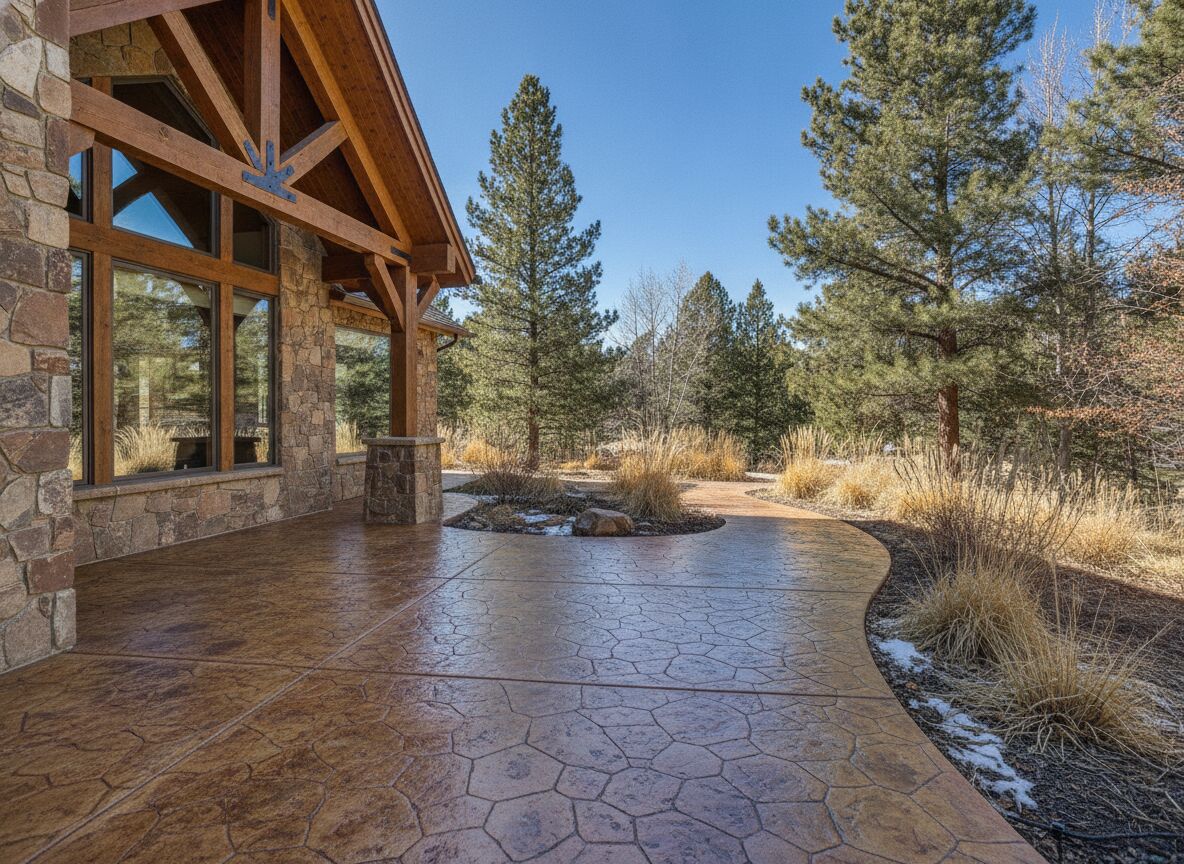
Denver's nickname as the "Mile High City" isn't just a fun fact — it has a real, measurable effect on how fast a concrete coating fades, chalks, or yellows. Here's why elevation matters for coating longevity, and what actually resists it.
The atmosphere filters out a portion of the sun's UV radiation before it reaches the ground. At elevation, there's simply less atmosphere between you and the sun, so more UV gets through — a well-documented effect that increases with elevation.
Prolonged UV exposure breaks down the chemical bonds in many coating formulations, leading to chalking (a powdery surface residue), yellowing, and fading of pigmented or metallic finishes. Standard epoxy is particularly prone to this without a dedicated UV-stable topcoat.
A garage floor that gets direct sun through an open door, or a patio/driveway coating with no shade, will show UV degradation faster at Colorado's elevation than the same coating would at sea level — even with identical sun exposure hours.
Polyurea topcoats formulated for UV stability are designed to resist this chalking and color-fade specifically, rather than relying on a base coat alone to handle sun exposure. The topcoat formulation — not just the base material — is what determines how a floor looks after several Colorado summers.
Noticing fading or chalking on an existing coated floor? Colorado Polyurea can assess whether recoating with a UV-stable system is the right fix — reach out for a free estimate.
No obligation. We'll assess your space and give you a real number.